
How Can Hunters Make a Positive Impact and Improve Their Image?
Posted by Roland Polzin on Aug 3rd 2026
Last verified: October 16, 2026. The answers below follow the national hunter education courses; where your state's manual words it differently, your state's manual wins.
If you landed here, there is a good chance a hunter education course just put this question on your screen, with four answers to choose from. Here is the short version first, then the part the test does not cover.
Short answer: by putting in time to improve wildlife habitat.
The other three options on the test (making nuisance species extinct, ignoring bag limits, poaching when no one is watching) describe exactly the behavior that turns neutral people against hunting. They are on the list so you can rule them out.
On this page: The image questions on the test · Why habitat is the right answer · How hunters pay for conservation · What a good image looks like · The question that is not on the test · Where your shooting really happens · Your first season, in order · FAQ
The image questions on your hunter ed test, answered
The chapter on the hunter's image usually asks some version of these. The wording varies a little from course to course; the answers do not:
| The question | The answer |
|---|---|
| How can hunters make a positive impact and improve their image? | By putting in time to improve wildlife habitat. |
| To bring respect to the sport of hunting, hunters can... | Support organizations dedicated to improving habitat and management efforts. |
| When speaking to non-hunters, hunters can present a positive public image by being prepared with what? | Facts: the importance of hunting for meat and as a wildlife management tool, the high recovery rate of wounded game, and hunting's safety record. |
| What can positive actions by responsible hunters (a positive public impression of hunters) lead to? | Wider public acceptance of hunting, which is what keeps seasons, land access and conservation funding in place. |
| How can you show respect for non-hunters? | Cover game in transit, keep photos tasteful, skip the graphic stories, clean up before going into town, and avoid confrontations. |
| What type of legislation do hunters advocate for and support? | Legislation that protects wildlife resources. |
Notice that none of the wrong answers are about skill. They are about character. That is the whole point of the chapter.
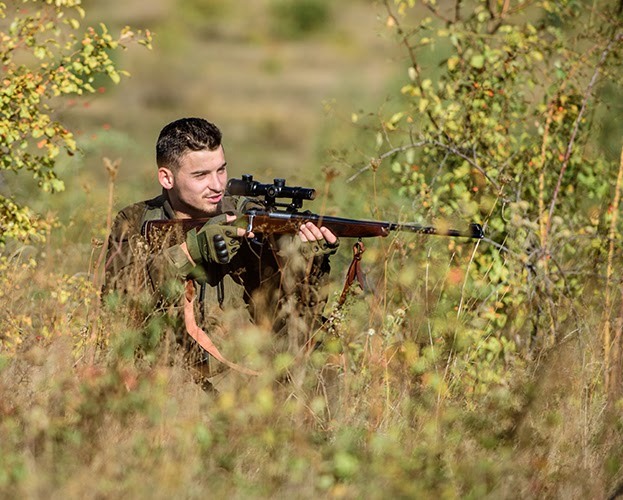
Why habitat is the right answer
Hunter education courses list five ways hunters make a positive impact: they put in countless hours to improve wildlife habitat, help biologists transplant game species and save other species from extinction, encourage others to practice ethical behavior, support legislation that protects wildlife resources, and present a professional image when talking to the media.
Habitat is first on that list for a simple reason: wildlife does not live in a license database, it lives in cover, food and water. A field that produces deer or turkey year after year is a field someone maintained. Planting food plots, clearing invasive brush, restoring wetlands, building nesting structures: this is unglamorous work, and it is the work that people who do not hunt can actually see and respect. We wrote more about this in what the hunter's role in wildlife conservation really is.
Hunters pay for conservation. Here is how that works.
In 1937, Congress passed the Pittman-Robertson Act and pointed the federal excise tax on firearms and ammunition at wildlife. The tax is still there: 11 percent of the manufacturer's sale price on rifles, shotguns, ammunition and archery equipment, and 10 percent on handguns. The U.S. Fish and Wildlife Service distributes that money to state wildlife agencies by formula, and in February 2026 it announced more than $1.2 billion in Wildlife and Sport Fish Restoration funds for the year.
The tax is built into the price of nearly every box of ammunition sold in the United States, ours included. It is one of the easiest facts in this debate to check, and it is worth having ready when someone asks why hunters get a say in how wildlife is managed.
The other number to keep in mind: about 14.4 million Americans hunted in 2022, roughly 6 percent of everyone 16 and older, according to the Fish and Wildlife Service's national survey. The future of hunting is decided by the other 94 percent. In a 2023 national survey by Responsive Management, 77 percent of Americans approved of legal hunting, down from about 81 percent two years earlier. That is still a large majority. However, it is a conditional one, and it moves with what people see hunters do.
What a good image looks like in practice
None of this requires a campaign. It comes down to small moments that non-hunters notice:
- Cover game while you drive home, and clean up before you go into town.
- Take tasteful photos, and think twice before posting the graphic ones.
- Keep the stories about animals you could not recover for hunting camp. To someone who does not hunt, they are simply repulsive.
- Care for the meat from field to freezer. Waste is the fastest way to lose an argument about hunting, and many states run programs that pass donated game meat to food banks.
- No alcohol while hunting, and no confrontations with people who disagree with you.
- Know why you hunt, and be able to explain it calmly, with facts.
The courses sum this up as the four Cs: courteous, considerate, capable and careful. Each hunter represents every hunter, whether they like it or not.
The image question that is not on the test: lead
There is one more topic non-hunters bring up, and it is one where hunters have done more than they get credit for. Federal rules have required nontoxic shot for waterfowl nationwide since 1991. California has required nonlead ammunition for all hunting with a firearm since July 1, 2019.
The reason is not abstract. A study published in Science in February 2022 sampled 1,210 bald and golden eagles across the country and found chronic lead exposure in 46 percent of the bald eagles, most likely from scavenging carcasses and gut piles that contain fragments of lead bullets.
You do not need a law to make this choice. Many hunters now carry solid copper bullets, which hold together and leave far fewer fragments in the meat and in the gut pile. It is one of the very few image questions you can answer at the gun counter.
Where your shooting really happens: at the range
Here is the part of a first season nobody warns you about: almost all of your shooting happens before opening day. Ethical shot placement is a skill, and skills come from repetition. If you want to take one calm, clean shot in the field, you will fire far more rounds at the range to earn it. (Our guide to ethical shot placement covers the anatomy.)
That is also where your own lead exposure comes from. When a conventional primer fires, it puts lead styphnate combustion products into the air right at the firing line, which is exactly where you are breathing, and on an indoor range that air recirculates. We know this one personally: EcoBullet was started by two veterans whose blood tests came back elevated after years on firing ranges. The details, including what OSHA requires of ranges, are in our post on why shooting ranges are switching to lead-free training ammunition.
So here is our honest recommendation: practice with lead-free training ammunition, and hunt with an expanding bullet that is legal in your state.
What we make for the practice part:
- 9mm 115gr TMJ and 9mm 124gr TMJ for handgun practice
- .223 Rem 55gr for AR-platform and bolt-action practice
- Shadow 300 BLK 220gr TMJ subsonic for suppressed rifles
Every round has a lead-free primer, so there is no lead styphnate in the smoke at ignition. The bullets are total metal jacket: the core is fully enclosed, front and back, so hot gas has nothing exposed to strip off at the base. Add 100 percent recycled brass and CO₂-neutral manufacturing, made in USA by a veteran-owned company. That is what we mean by Least-Lead-Exposure™: less lead where you breathe, not a claim that lead has left the building.
The question every new shooter asks is whether it runs. An independent reviewer put our 115gr load through five handguns and measured velocities and consistency comparable to common range brands; the numbers are in our post on whether lead-free ammo is as reliable as standard ammo.
What we do not make: hunting bullets. A TMJ bullet is designed not to expand. That is what you want at the range and exactly what you do not want on a deer, and in many states it is not legal for big game. We would rather tell you that than sell you the wrong box.
Your first season, in order
- Finish your hunter education course and keep the card with your license.
- Read your state's regulations for the species you want to hunt, including legal calibers and bullet types.
- Pick one rifle (or bow) and learn it well before you buy anything else.
- Practice at realistic distances and from realistic positions, not only off a bench. This is where training ammunition earns its keep, and where lead-free training rounds keep the lead out of your lungs.
- Two or three weeks before the season, switch to the hunting load you will actually carry and confirm your zero. Different bullets hit in different places.
- Give something back: join a habitat project with your state agency or a conservation group, share the meat, or take a non-hunter to the range.
That last step is the real answer to the test question. The course only asks you to pick it; the season asks you to do it.
FAQ
What is the correct answer to "How can hunters make a positive impact and improve their image?"
By putting in time to improve wildlife habitat. The other options on the test (making nuisance species extinct, ignoring bag limits, poaching when no one is watching) are examples of the behavior that damages hunting's image.
What can a positive public impression of hunters lead to?
Wider public support for hunting. Only about 6 percent of Americans hunt, so seasons, land access and conservation funding depend on how the other 94 percent see hunters. Positive actions by responsible hunters build that support; bad behavior pushes neutral people toward the anti-hunting side.
When speaking to non-hunters, what should hunters be prepared with?
Facts: the importance of hunting for meat and as a wildlife management tool, the high recovery rate of wounded game, and hunting's strong safety record.
How do hunters pay for wildlife conservation?
Through license fees and the Pittman-Robertson excise tax: 11 percent on rifles, shotguns, ammunition and archery equipment, 10 percent on handguns. The U.S. Fish and Wildlife Service distributes it to state wildlife agencies; in February 2026 it announced more than $1.2 billion in Wildlife and Sport Fish Restoration funds.
Can I hunt with EcoBullet ammunition?
Our rounds are training ammunition with total metal jacket bullets, which do not expand. Use them to practice. For game, use an expanding bullet that is legal in your state, and confirm your zero with that load before the season.
Why use lead-free primer ammunition for practice?
Conventional primers release lead compounds into the air at the firing line, where you breathe during every practice session. Lead-free primers remove that source, and a total metal jacket keeps the core enclosed. It means less lead where you breathe, not that all lead is gone.