Eco vs Regular! Independent Testing, Real Results (GBGuns test)
Posted by Roland Polzin on Aug 3rd 2026
No time to read for two minutes? Watch the full independent video instead:
Short answer: our 9mm ran. In December 2025, the GBGuns channel put our 9mm 115gr TMJ through five handguns with barrels from 3 to 11.15 inches, measured the velocities with a chronograph, and published the numbers in a written review and a video. The velocities were what you expect from a 115 grain range load, the consistency was better than the reviewer expected from recycled brass, and he called the price premium "cheap insurance" for indoor ranges and ported guns.
Why we care what someone else's chronograph says
Lead is toxic, and keeping it away from the shooter is the reason EcoBullet exists. But none of that matters if the ammunition doesn't go bang every time and shoot like the range ammo you already train with. We can tell you what we designed this load to do. What counts is what happens when somebody else loads a magazine, fires it through their own guns, and writes down what they see.
A good independent review looks at the things that decide your range day:
- Function in real, unmodified firearms
- Velocity and how consistent it stays from shot to shot
- How the load behaves as barrel length changes
- Whether the maker describes the product honestly
What GBGuns tested
The reviewer fired five-shot strings from five handguns, from a micro-compact to an 11.15 inch pistol-caliber platform, at about 300 feet elevation and 42°F. These are the averages and standard deviations from the charts in his review:
| Firearm | Barrel | 5-shot average velocity | Standard deviation |
|---|---|---|---|
| SAR9 SC Gen 3 | 3" | 1,026 fps | 22.06 fps |
| Fusion Firearms / Ermox XP Pro | 4" | 1,107 fps | 17.05 fps |
| Grand Power Q100 | 4.25" | 1,104 fps | 10.44 fps |
| M2XI | 5" | 1,148 fps | 13.79 fps |
| Draco | 11.15" | 1,283 fps | 9.5 fps |
What the numbers say:
- Normal 115 grain velocities. In the reviewer's words, the load is an alternative "that won't impact the way the firearm functions or recoil feels."
- Clean scaling with barrel length. Velocity rises steadily from the 3 inch to the 11.15 inch barrel, with no odd jumps.
- Tight consistency. The reviewer went in expecting recycled brass to cost consistency, and came out with "consistency matching some of the best tested, I'm impressed."
What I see in my own pistol
I have shot about 500 rounds of our 115 grain through my own Heckler & Koch P8, the German Army's longtime service pistol, without a single malfunction. Two things stand apart from the range ammo I used before. The smell at the firing line is slightly different, and the pistol comes out of a range session much cleaner, with almost no fouling, which I appreciate every time I clean it. However, that is one shooter and one gun, so I would never ask you to buy on my impression alone. It is exactly why the chronograph data above, from someone who doesn't work for us, matters more than anything I can tell you.
Why the primer matters most indoors and with ported guns
A conventional primer contains a lot of lead styphnate. When it fires, toxic lead leaves the muzzle and the ejection port as a fine cloud at face height, and a ported barrel throws even more gas up and back toward the shooter. Our 9mm uses a lead-free primer and a total metal jacket that encloses the lead core, base included, so the hot gas has no exposed lead to strip off. That is the whole idea: keep lead away from the shooter, in ammunition that shoots like the range ammo you already know.
That is also where the reviewer landed. He was honest that EcoBullet may not replace his everyday plinking ammunition, and that it costs a little more. His verdict: a smart choice and "cheap insurance" whenever ported guns are used, for any shooting at an indoor range, and especially for a ported gun at an indoor range.
More than one outside review
GBGuns wasn't the last channel to put our 9mm on the range. In January 2026, the BuffmanRange channel on YouTube reviewed the same 115 grain load and didn't spare us on price, which is exactly what an outside review is for. Several customers have run their own tests, too. You can find the full picture in our post on whether lead-free ammo is as reliable as standard ammo.
What we took from the reviews
We read the comments, all of them. This is what we're doing about them:
- Clearer specs and test context on every product page
- Lot-based information where it helps you
- More independent testers, held to the same standard as every other brand
What our customers tell us lines up with the reviews: the ammunition runs, the gun stays cleaner, and the price is reasonable for least-lead-exposure ammunition. Many shooters who buy purely on price don't see the value yet, though. That mirrors what I experienced in the military and on many ranges: health simply isn't on most shooters' minds (yet).
Eco is part of who we are, but we know how shooters buy ammunition: reliability first, then accuracy, then everything else. If it doesn't run, nothing else matters. So we build ammunition people want to shoot, and then we take the lead out where it reaches your lungs.
Try the load that was tested
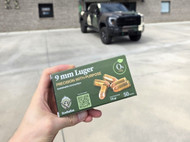
The tested load is our 9mm 115gr TMJ with a lead-free primer, $19.99 for a box of 50 ($0.40 per round), in recycled brass. If you carry 124 grain, our 9mm 124gr TMJ uses the same primer and the same total metal jacket. Ranges, instructors, and agencies can get volume pricing and samples on our ranges and agencies page. You must be 21 or older to order, and each state has its own rules, which you can find in our state-by-state shipping guide.
Frequently asked questions
Has EcoBullet ammunition been tested independently?
Yes. In December 2025, the GBGuns channel tested our 9mm 115gr TMJ in five handguns with barrels from 3 to 11.15 inches and published the velocity and consistency data. In January 2026, the BuffmanRange channel reviewed the same load on YouTube, and several customers have run their own tests.
How fast is EcoBullet 9mm 115gr?
In the GBGuns test, five-shot averages were 1,026 fps from a 3 inch barrel, 1,104 to 1,148 fps from 4 to 5 inch barrels, and 1,283 fps from an 11.15 inch barrel. Those are normal velocities for a 115 grain range load.
Does recycled brass make the ammunition less consistent?
Not in this test. The reviewer expected recycled brass to cost some consistency; the standard deviations ran from 9.5 to 22 fps across the five guns, and he rated the consistency as matching some of the best he had tested.
Does lead-free primer ammunition keep the gun cleaner?
In my own pistol, yes. After about 500 rounds of our 115 grain, my P8 shows almost no fouling, which makes cleaning much easier. That is one gun and one shooter's experience, not a lab measurement, so look at your own slide and barrel after a box.
Have the 124 grain 9mm, the .223, and Shadow been tested too?
Not yet. The published tests cover the 9mm 115 grain load. The 124 grain 9mm uses the same primer and the same total metal jacket construction, and we'll link new tests here when they're published.
Where can I buy the tested load?
Directly from ecobullet.us, shipped by ground in boxes of 50. You must be 21 or older to order, and some states require delivery to a licensed dealer or a permit on file first.
Questions about the load or the test data? Write to info@ecobullet.us, use the website chat, or call +1 423 445 0808.
Watch the review
If you want the unfiltered version, watch the full GBGuns video on YouTube or read the written review with all charts, and decide for yourself.