Who Makes Lead-Free Ammunition in the USA?
Posted by Roland Polzin on Oct 31st 2026
By Roland Polzin, co-founder and CEO of EcoBullet. I checked every maker's website and a major US retailer for prices and stock on October 29, 2026. Prices and stock change often, so check them yourself before you buy.
Short answer: several US ammunition makers sell lead-free loads in 9mm, .223 Remington, and 300 Blackout; however, "lead-free" on the box means one of three things: a lead-free primer behind a jacketed lead-core bullet, a lead-free bullet behind a conventional primer, or both. The table below sorts every line I could verify by that distinction, with the calibers it covers, where it is made, and the price per round at a retailer. Interestingly, a surprising number of lead-free lines were listed as discontinued, out of stock, or "coming soon" when I looked.
EcoBullet is one of the lines in the table. I put our own row at the bottom and held it to the same standard as everyone else's.
What "lead-free" can mean
A conventional cartridge contains lead in two places: the primer compound, which contains a lot of lead styphnate, and the bullet core. Makers can replace either one, or both:
- Primer: replacing the primer keeps the bullet weight and the ballistics familiar and addresses the lead that goes airborne at ignition.
- Bullet: replacing the bullet with copper, zinc, or a sintered metal changes weight and feel but removes lead from the projectile, which some states require for hunting.
- Both: no lead at ignition and none in the projectile, usually at a higher price.
Our post on lead-free 9mm ammo explains the three combinations in more detail. For the table, I kept it to just the labels: primer, bullet, or both.
Lead-free ammunition sold in the USA
Calibers are limited to the three I checked. "Made in" is what the makers claim. Prices are per round, and stock status is per the retailer.
| Maker and line | 9mm / .223 / 300 BLK | What is lead-free | Made in | Intended use | Price per round and status |
|---|---|---|---|---|---|
| Remington UMC Leadless | 9mm 100gr, .223 55gr / no 300 BLK found | Both: powdered-metal bullet core and Catalyst lead-free primer | Lonoke, Arkansas | Range training where lead is restricted | $0.59 (9mm), $1.37 (.223); MidwayUSA, "coming soon" |
| Federal American Eagle Indoor Range Training | 9mm 70gr only | Both: lead-free bullet and Catalyst lead-free primer | Not stated by Federal | Target shooting | $0.45; Target Sports USA, in stock (discontinued at MidwayUSA) |
| Federal BallistiClean | 9mm 98/100gr frangible, .223 42gr frangible / no 300 BLK | Both: frangible lead-free bullet and Catalyst primer | Not stated on the pages I read | Training, steel targets | $0.60 (9mm), out of stock; $0.85 (.223), discontinued |
| Federal Syntech (Range, PCC, Defense) | 9mm only | Primer only: Catalyst primer; polymer-coated lead-alloy core | Not stated by Federal | Target shooting, carbines, defense | $0.42 (PCC 130gr); SGAmmo, in stock; Range load discontinued |
| Speer Lawman Clean-Fire | 9mm 124gr and 147gr TMJ only | Primer only: primer with no lead, barium, or antimony; fully encased lead core | Not stated by Speer | Training, indoor ranges | $0.56; Target Sports USA, out of stock |
| Magtech Clean Range | 9mm 115gr and 124gr only | Primer only: lead-free primer, fully encapsulated lead-core bullet | Not stated on the pages I read | Indoor range | $0.30; Target Sports USA, out of stock; discontinued at MidwayUSA |
| Winchester Super Clean | 9mm 95gr zinc core only | Both: zinc-core bullet and lead- and heavy-metal-free primer | Not stated by Winchester | Indoor and outdoor range training | $0.52 ($0.48 by the 500); MidwayUSA, in stock |
| Winchester WinClean | 9mm 115/124/147gr only | Primer only: lead- and heavy-metal-free primer; enclosed lead core | Not stated by Winchester | Indoor and outdoor range | $0.52 ($0.48 by the 500); MidwayUSA, in stock |
| Winchester Varmint X Lead Free | .223 38gr only | Bullet only: zinc-core hollow point; primer not stated | Not stated by Winchester | Varmint and predator hunting | $1.10; MidwayUSA, discontinued |
| Sellier & Bellot NONTOX | 9mm 124gr only | Primer only: heavy-metal-free primer; fully encapsulated bullet | Czech Republic | Range, competition | $0.46; Palmetto State Armory, out of stock |
| SinterFire (GreenLine, RHA, Special Duty, NXG) | 9mm verified as loaded ammo; .223 and 300 BLK bullets listed | Bullet in all lines (copper-tin frangible or monolithic copper); lead-free primer in GreenLine only, standard primer in the others | Kersey, Pennsylvania (company address) | Training on steel, defense | $0.80 (Special Duty 9mm); MidwayUSA, in stock |
| Hornady BLACK NTX and Superformance CX | 300 BLK 110gr NTX, .223 55gr CX / no 9mm | Bullet only: lead-free copper-alloy projectiles; primer not stated | USA (Hornady) | NTX: general and defense; CX: hunting | $1.90 (300 BLK), in stock; $1.65 (.223), discontinued; MidwayUSA |
| Barnes VOR-TX | 300 BLK 110gr, .223 55gr; 9mm discontinued | Bullet only: all-copper; the maker makes no lead-free claim for the cartridge | Not stated by Barnes | Hunting | $2.25 (300 BLK); MidwayUSA, in stock |
| Nosler E-Tip | .223 55gr, 300 BLK 110gr / no 9mm | Bullet only: lead-free E-Tip; primer not stated | United States (Nosler) | Deer-sized game | $1.70 to $3.05 (300 BLK); out of stock at MidwayUSA (expected back November 13, 2026) and at Nosler |
| Lehigh Defense and Underwood (Xtreme Defender, Maximum Expansion) | 300 BLK 194gr subsonic (Lehigh), 9mm 90gr +P+ (Underwood) / no .223 found | Bullet only: solid copper; primer not stated | Lehigh: Berryville, Arkansas | Defense, hunting | $4.10 (300 BLK subsonic, Lehigh at Wilson Combat, orderable); $1.55 (9mm, MidwayUSA, in stock) |
| Liberty Ammunition (Civil Defense, OverWatch) | 9mm 50gr +P, .223 55gr, 300 BLK 96gr | Bullet only: monolithic copper; primer not stated | Not stated (company in Bradenton, Florida) | Self-defense | $2.00 (9mm, MidwayUSA), in stock; $2.60 (300 BLK, Liberty store), in stock; the .223 Civil Defense listing used earlier is gone |
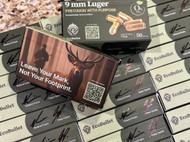
| EcoBullet | 9mm 115gr TMJ, 9mm 124gr TMJ, .223 55gr FMJ, 300 BLK 220gr TMJ subsonic | Primer only: lead-free primer; 9mm and 300 BLK bullets are total metal jacket with the lead core enclosed; for now, the .223 bullet is a standard FMJ | USA; company based in Chattanooga, Tennessee | Range training; 300 BLK for suppressed rifles | $0.40 (9mm 115gr), $0.44 (9mm 124gr), $0.50 (.223), $1.10 (300 BLK); check current stock |
What the table shows
First, the ammo in the table falls into three groups which are more telling than the brand:
- The primer-only group (Speer Clean-Fire, Magtech Clean Range, Winchester WinClean, Sellier & Bellot NONTOX, Federal Syntech and our own loads) is the range-training category: standard bullet weights, standard feel, with the primer lead removed from the smoke at the firing line.
- The both group (Remington UMC Leadless, Federal Indoor Range Training and BallistiClean, Winchester Super Clean) goes one step further with zinc, powdered-metal, or frangible bullets. Those are lighter than what most people train with: 70 to 100 grains in 9mm instead of 115 to 147.
- The bullet-only group (Barnes, Nosler, Hornady, Liberty, Lehigh, Underwood) is hunting and defense ammunition that uses copper projectiles. With one exception, none of those makers say anything about the primer. Prices are on the high end for this ammo.
Second, availability. As of October 29, 2026, of the range-training lines, only Winchester's two loads (at MidwayUSA) and Federal's Syntech PCC (at SGAmmo) were in stock, plus Federal's Indoor Range Training load, which was in stock at only one retailer. Speer, Magtech, Sellier & Bellot and Federal BallistiClean were out of stock, Remington's line was "coming soon", and several products carried a "discontinued" flag. That's what a small category looks like: the big brands offer a lead-free line, but they don't prioritize it. In the retailer searches I ran, I didn't find a subsonic 300 Blackout load with a lead-free primer from any of the makers above; Lehigh's 194-grain subsonic is a copper bullet with no primer statement. That's why we launched our Shadow 300 Blackout.
Third, labels. One large retailer's "lead-free" filter marks Speer Clean-Fire and Federal Syntech as not lead-free because their bullets have lead cores, and marks some frangible loads differently on two different pages. The filter isn't wrong, exactly - it just doesn't help people find what they're looking for. Hence: read the maker's own description of the primer and the bullet and don't blindly trust the filter.
The chemistry behind a lead-free primer
A conventional primer uses lead styphnate as its initiating explosive, often with barium nitrate and antimony sulfide, and all three leave the muzzle as fine particles when the round fires. Lead-free primers replace lead styphnate with a different initiator. The most common one is diazodinitrophenol (DDNP), a replacement substance listed by Federal on the safety data sheet of its BallistiClean line. Federal and Remington's current Catalyst primer is a proprietary formulation that Federal describes as "non-hygroscopic," unlike earlier DDNP primers. However, they don't publish the compound itself. Speer, Winchester, and Sellier & Bellot describe their primers only by what they don't contain - lead, barium, and antimony.
Why this matters indoors is defined in NIOSH's alert on lead at indoor firing ranges. It names lead bullets and cartridge primers as the primary sources of exposure, recommends jacketed or non-lead bullets to reduce emissions at the firing line, and recommends non-lead primers designed for ranges. It also notes that fumes come from the exposed base of a bullet in contact with hot propellant gas, which is why total metal jacket bullets (which have their base enclosed) are paired with lead-free primers in most range lines. Range operators can find the regulatory numbers in our post on why ranges are switching to lead-free training ammunition.
Is "lead-free" a defined term?
Not in general. I haven't found any federal or state definition of "lead-free ammunition" as a marketing term for centerfire cartridges. The two legal definitions that do exist are narrow:
- California's hunting rule defines a nonlead projectile as one with no more than one percent lead by weight, certified by the state. Primers aren't mentioned.
- The federal waterfowl rule approves "nontoxic" shot only below one percent lead (applicable to shotgun shot).
Everything else is industry language and inconsistent: some writers reserve "lead-free" for cartridges with no lead in any component, others use it for frangible loads with a conventional primer. The practical consequence is that buyers should do their research before deciding what to get.
Where EcoBullet fits
We are in the primer-only group on purpose. Our 9mm and 300 Blackout loads pair a lead-free primer with a total metal jacket bullet whose lead core is fully enclosed (including the base). Only our .223 pairs lead-free primers with a standard 55-grain full metal jacket while we look for an appropriate TMJ alternative. None of our bullets are lead-free, to preserve ballistics and allow all shooters to train under realistic conditions. With that approach, EcoBullet is able to offer standard bullet weights at range prices while ensuring the least lead exposure for the shooter. EcoBullet is also the only store offering subsonic 300 Blackout with a lead-free primer. You can find independent reviews of our 9mm in our post on whether lead-free ammo is as reliable as standard ammo.
Frequently asked questions
What does "lead-free" mean on an ammunition box?
One of three things: a lead-free primer with a jacketed lead-core bullet, a lead-free bullet with a conventional primer, or both. There is no general legal definition of centerfire ammunition in the United States, so the producer's description of the primer and bullet is the only reliable guide.
Which US ammunition companies make lead-free primers?
Federal and Remington load the Catalyst lead-free primer; Speer and Winchester describe their range primers as free of lead and heavy metals; Magtech describes a lead-free primer in its Clean Range line; Sellier & Bellot (a Czech company selling in the US) does the same in its NONTOX line. All EcoBullet ammo is made with lead-free primers. Most makers of copper hunting bullets do not state what primer they use.
Is lead-free ammunition more expensive?
Usually yes. Primer-only range loads are listed from $0.30 to $0.56 per round in 9mm (most of them out of stock); loads with both a lead-free primer and a lead-free bullet run $0.45 to $0.60 in 9mm and $0.85 to $1.37 in .223; copper hunting and defense loads run $1.55 to $4.10 per round.
Is lead-free ammunition required anywhere?
For hunting, yes, in some places: California requires certified nonlead projectiles for all hunting, and federal rules require nontoxic shot for waterfowl. These rules apply to the projectile. For range shooting, no law requires lead-free ammunition, but some indoor ranges set their own policies, often to protect their staff from exposure.
Is there subsonic 300 Blackout ammo with a lead-free primer?
Among the makers in the table, I found none that list a lead-free primer for a subsonic 300 Blackout load. The subsonic copper loads I found don't list the primer. EcoBullet Shadow, a 220-grain total metal jacket subsonic load, has a lead-free primer.
Where can I buy lead-free ammunition?
From the makers' own stores and from the large online retailers. Keep in mind that the "lead-free" filter is not necessarily reliable for that purpose. Our loads ship by ground from ecobullet.us to most states; you must be 21 or older to order, and each state has its own rules, which you can find in our state-by-state shipping guide.
Sources
- NIOSH Alert 2009-136, Preventing Occupational Exposures to Lead and Noise at Indoor Firing Ranges
- California Code of Regulations, 14 CCR 250.1; federal nontoxic shot rule, 50 CFR 20.134
- Remington UMC Leadless: Shooting Times, January 2024
- Federal: American Eagle Indoor Range Training, Syntech PCC, Power-Shok Copper
- Speer: Lawman Clean-Fire
- Winchester: Super Clean, WinClean, Varmint X Lead Free
- Sellier & Bellot: NONTOX data sheet
- SinterFire: ammunition lines and product sheet
- Hornady: BLACK 300 BLK NTX; Barnes: VOR-TX 300 BLK; Nosler: E-Tip 300 BLK
- Lehigh Defense: 300 BLK 194gr subsonic; Underwood: 9mm Xtreme Defender; Liberty: about
- Prices and stock read on October 29, 2026, at MidwayUSA, Target Sports USA, SGAmmo, Palmetto State Armory, Wilson Combat (Lehigh Defense: 300 BLK 194gr), the Nosler store, and the Liberty store.